
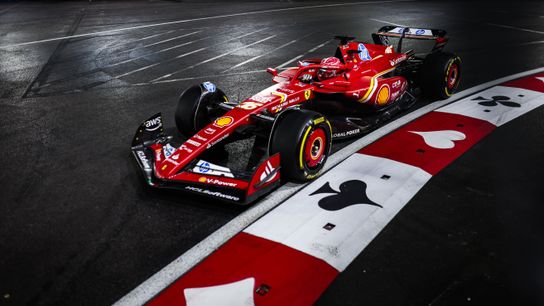
Ferrari’s Las Vegas Grand Prix will be remembered as a turbulent race, not solely for its on-track action but for the internal frustrations that overshadowed their result. While Carlos Sainz secured third place and Charles Leclerc finished fourth, the spotlight shifted to the handling of team orders, strategy missteps, and fiery radio exchanges that revealed cracks in the collaboration between the drivers and their team.
The pair swapped positions three times during the race, but it was their final exchange—executed against instructions—that defined the outcome and left both drivers critical of Ferrari’s management.
Tense On-Track Battle
Leclerc got the initial jump, overtaking Sainz to claim second place on the opening lap. He momentarily set his sights on leader George Russell but was quickly thwarted by severe tire graining on his mediums. Recognizing his struggles, Ferrari instructed Leclerc to allow Sainz through. Leclerc complied, and Sainz moved into second as the Monegasque fell back.
However, Sainz encountered similar tire degradation, leading to another shuffle between the teammates by lap 26 as Leclerc reclaimed the position. With Lewis Hamilton closing in on the Ferrari pair, the team issued an order for Sainz to relinquish his position once more. Sainz refused to comply at first, stating over the radio that he would yield at a later corner, only to delay further—and then eventually swap places with Leclerc.
Just as Ferrari attempted to bring some clarity to their lineup, chaos ensued in the pits. A late call to box Sainz was canceled at the last second, forcing him to continue another lap and costing him valuable time. When he did eventually pit, Leclerc remained out for three laps longer. Emerging from his stop, Leclerc was told that Sainz had been instructed not to overtake him.
That clarity didn’t last long. With better tire temperature, Sainz swept past Leclerc in the DRS zone before the instruction could take effect. This was the final position swap, setting their finishing order—and the tone for their frustration. Over the radio, a clearly irritated Leclerc quipped, “Maybe try in Spanish,” alluding to a lack of communication between driver and team.
Tyler Tate | T Squared Media House
Explosive Radio Messages
Following the race, Leclerc didn’t hold back during his fiery team radio exchange with engineer Bryan Bozzi. Bozzi attempted to calm Leclerc, commending him with, “Charles, you did your job… okay, thank you.”
Leclerc, however, fired back, his voice laden with anger. “Yeah. Yeah-yeah. Yeah, I did my job, but, uh... being nice f***s me over all the f*****g time. All the f*****g time. It’s not even being nice, it’s just being respectful, I know I need to—”
Before Leclerc could finish, Bozzi cut in, urging him to quiet down, to which Leclerc snapped: “Shut up, but at one point, it’s always the same. Oh my f*****g God.”
The tension extended as Bozzi redirected Leclerc to complete end-of-race procedures, including picking up tire debris. Leclerc, still seething, shot back, “Yeah-yeah, f*****g pick up, what the f**k you want?” He later apologized for having his radio on and promptly shifted the post-race discussion to McLaren and the race winner George Russell. Despite the apology, his anger reflected an underlying issue with the day’s events.
Post-Race Reactions
When asked about the incidents post-race, Leclerc was more reserved but still hinted at his dissatisfaction. “It’s frustrating—yes—but it doesn’t change anything for the team,” said Leclerc. “It’s not about favoring one [driver] or the other. It’s about things we’ve been told that weren’t respected.”
Leclerc stopped short of giving further details, repeating, “I’ve said too much already. But it’s just frustrating when it’s like this.”
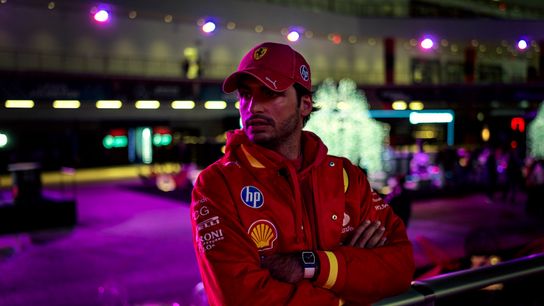
Sainz, meanwhile, was equally discontented. Speaking to the media, he criticized Ferrari’s race management, particularly the time lost in their positional swaps and his mismanaged pit stop. “We were ahead of Lewis [Hamilton] before that pit stop, and I had already been asking for a couple of laps to box,” he explained. “I lost a lot of time letting Charles by, I’m not going to lie, and I’m not happy about that.”
Sainz stressed his preference for handling such matters internally, saying, “I don’t like using the media to criticize or prove a point. I prefer to do that behind closed doors. But the whole situation was messy, and I’m the first one to admit I’m not happy.”
Despite the frustration, Sainz acknowledged the gap to Mercedes and doubted whether a clean race would have changed the result. “Mercedes was simply quicker today. P3 and P4 were the maximum we could achieve,” he said.
Tyler Tate | T Squared Media House
The Team’s Take
Ferrari team principal Fred Vasseur faced tough questions after the race but downplayed concerns over the drivers’ relationship or their roles as team players. “The situation was really difficult for everybody,” he admitted. “Charles was frustrated, but we will discuss tonight, and it won’t be an issue.”
Vasseur also stressed that emotional moments like these are common in high-pressure environments. “It’s always the same story. Drivers don’t have the full picture during the race. We will review things together, and I’m not worried at all,” he added.
Championship Implications
Amid the intra-team skirmishes, Ferrari gained ground on McLaren in the Constructors’ Championship, narrowing the gap to 24 points with two races left. For Leclerc, the stakes remain high in his quest for second place in the Drivers’ Championship, though he trails Lando Norris by 21 points. Neither target is impossible, but Ferrari must resolve its lingering communication issues to secure the best possible finish to the season.
The Las Vegas Grand Prix highlighted once again the delicate balance Ferrari must strike between managing two ambitious drivers, executing a coherent strategy, and achieving their goals, especially now with Lewis Hamilton coming to the team in 2025. High emotions and missed opportunities dominated the evening, leaving the team with much to fix as the season draws to a close.