


Formula 1 will still race 24 Grands Prix in 2027. How it gets through those 24 weekends, however, is changing considerably.
Formula 1 and the FIA released the 2027 World Championship calendar Wednesday, confirming 24 Grands Prix across 22 countries and five continents. The season will begin March 12-14 in Bahrain and conclude Dec. 10-12 in Abu Dhabi, but underneath the familiar 24-race total is a schedule featuring a record 10 Sprint weekends, returns for Portugal and Türkiye, a new season opener and some significant changes to the rhythm of the championship.
Bahrain replaces Australia at the front of the schedule, while Melbourne moves to Round 3. Portugal returns at Portimão for the first time since 2021, Istanbul Park rejoins the championship as part of a five-year agreement, and Madrid's MADRING returns for its second Spanish Grand Prix. Formula 1 has also made perhaps its most aggressive commitment yet to the Sprint format, increasing from six Sprint weekends in 2026 to 10 next season.
Taken individually, none of those changes fundamentally alters Formula 1. Put them together, and the 2027 championship starts to look like something more significant than another collection of dates.
Ten Sprints Changes the Rhythm of the Season
The biggest structural change is the expansion of Sprint racing. Bahrain, Australia, Japan, Monaco and Abu Dhabi will host Sprints for the first time, while Canada, Great Britain, Italy, Brazil and Qatar retain the format. Three of the first four race weekends will therefore feature Sprints, while Qatar and Abu Dhabi will close the championship with consecutive Sprint weekends.
That matters beyond simply adding four more Saturday races. Sprint weekends reduce teams from three traditional practice sessions to one before competitive running begins, putting greater emphasis on simulator preparation and getting the car into its setup window immediately. With Bahrain, Australia and Japan all hosting Sprints during the opening four rounds, teams that arrive in 2027 struggling to understand their cars will have considerably less track time to solve those problems before points are available.
Formula 1's reasoning is straightforward. According to data released by F1, total viewership on Sprint weekends is 12% higher than on conventional weekends, while Sprint Qualifying can attract up to three times the audience of a traditional practice session. F1 also says 82% of surveyed attendees believe the format adds value to their ticket, while 75% of fans surveyed believe Sprints add value to the season calendar.
The numbers help explain why a format introduced with only three events in 2021 is about to occupy nearly half of the Formula 1 schedule. Ten Sprints is no longer an experiment around the edges of the championship. Formula 1 is making the format a substantial part of how a season is contested.
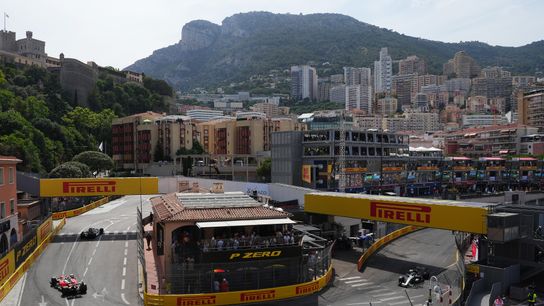
Photo by Alex Bierens de Haan/LAT Images
Monaco Gets the Sprint Treatment
Of the five new Sprint venues, Monaco will almost certainly generate the most discussion. The narrow streets of Monte Carlo are famous for qualifying and equally famous for making overtaking difficult with modern Formula 1 cars, yet the Principality will host its first Sprint from June 4-6.
The format does play directly into one of Monaco's strengths. Sprint Qualifying on Friday will give drivers one flat-out qualifying session around the street circuit before Saturday's Sprint, followed later that day by traditional qualifying for Sunday's Grand Prix. Instead of three practice sessions surrounding Monaco's main qualifying spectacle, fans will effectively get two qualifying sessions and two races during the weekend.
Whether an additional race creates more passing is another question entirely. What it unquestionably does is increase the amount of consequential track time at a venue where the pursuit of a qualifying lap has often become as compelling as the Grand Prix itself.
Portimão and Istanbul Park Are Back
Formula 1 is also restoring two familiar circuits. Portugal returns June 18-20 at the Autódromo Internacional do Algarve, better known as Portimão, which last hosted Formula 1 during the pandemic-era seasons of 2020 and 2021. The Portuguese venue has signed a two-year agreement covering 2027 and 2028.
Portimão offers something increasingly distinctive on the Formula 1 calendar. Its 4.6-kilometer layout rises and falls dramatically across the Algarve terrain, with elevation changes, crests and blind approaches giving the circuit a character markedly different from many modern venues. Its June date places Portugal between Monaco and Silverstone during the European portion of the championship.
Türkiye's return carries a longer commitment. Istanbul Park rejoins Formula 1 from Oct. 1-3 under a five-year agreement running through 2031, although its 2027 event remains subject to FIA circuit homologation. The Turkish circuit last hosted Formula 1 in 2021 and remains best known for Turn 8, its long, multi-apex left-hander that became one of the defining corners of the venue's original run on the calendar.
Istanbul also lands in one of the season's more demanding stretches. Azerbaijan runs Sept. 24-26, followed immediately by Türkiye on Oct. 1-3 and Singapore on Oct. 8-10, creating three consecutive race weekends in three countries before teams finally get a week away from competition.
Bahrain Gets the First Word
Australia has frequently occupied Formula 1's traditional opening-weekend spotlight, including the start of the 2026 season. In 2027, that distinction returns to Bahrain.
Teams will first arrive at the Bahrain International Circuit for a four-day preseason test from Feb. 24-27. They will return two weeks later for the Bahrain Grand Prix from March 12-14 before traveling directly to Saudi Arabia, followed by Australia, Japan and China. Formula 1 says the schedule has been organized with a more efficient geographical flow in mind as part of the championship's broader sustainability objectives.
The reduction in preseason testing is another change from 2026. This year's major technical regulations required an expanded preparation program, while regulatory continuity heading into 2027 allows Formula 1 to return to a single four-day test.
That makes Bahrain particularly important. Teams will conduct their only official preseason test there, then return almost immediately for a Sprint weekend in which meaningful championship points are available after only one practice session.
MADRING Moves From Newcomer to Year Two
Madrid's MADRING barely had time to finish its inaugural Formula 1 weekend before its second appearance became official. The Spanish Grand Prix returns to the new circuit Sept. 10-12, one week after the Italian Grand Prix at Monza.
That second visit should be considerably different from the first weekend we just watched. Teams arrived in Madrid this year without historical Formula 1 data from the 22-turn hybrid circuit, meaning much of Friday practice was spent establishing real-world setup information, tire behavior and racing lines around a venue previously known primarily through simulation. In 2027, teams will return with a complete Grand Prix weekend of information to work from.
The European calendar also looks different around Madrid. Formula 1's official 2027 schedule lists MADRING as Spain's lone round, while Barcelona does not appear. Zandvoort is also absent as Portugal and Türkiye return to the 24-race championship.
The Championship Finish Gets More Intense
The final stretch of the season remains geographically familiar, but the Sprint expansion changes its competitive weight. Austin begins a triple-header with Mexico City and São Paulo before Formula 1 returns to Las Vegas from Nov. 18-20. Brazil will again host a Sprint, meaning additional points will already be available during that three-race stretch.
After Las Vegas, Formula 1 finishes with Qatar from Dec. 3-5 and Abu Dhabi from Dec. 10-12. Both will be Sprint weekends, creating consecutive Sprints to finish the season and placing additional championship points into play during the final two rounds.
That could become particularly significant if either championship remains close in December. Rather than finishing with two conventional Grand Prix weekends, drivers and teams will face four separate points-paying races across eight days, with substantially less practice time to recover from a setup mistake.
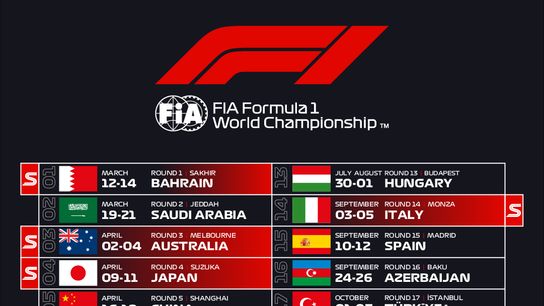
The Complete 2027 Formula 1 Calendar
Preseason testing will take place in Bahrain from Feb. 24-27 before the 24-round championship begins.
Same Number of Grands Prix, Different Championship
That is ultimately what makes Wednesday's announcement more interesting than the number 24 suggests. Formula 1 hasn't expanded the Grand Prix calendar, but it has put substantially more competitive running inside it. Ten Sprint weekends mean more races, more qualifying sessions and less practice at nearly half the events on the schedule.
Portugal and Türkiye restore two circuits absent since 2021. MADRING moves from novelty to an established stop. Bahrain takes over opening duties, and Monaco—the weekend where qualifying has long carried unusual importance—is getting a second race and another qualifying session.
There are legitimate questions about whether expanding to 10 weekends risks making the Sprint less distinctive, just as there will be debate over whether every circuit is suited to the format. But Formula 1's own audience numbers make clear why the championship is moving in this direction. The Sprint is no longer being tested to determine whether it belongs.
Formula 1 has decided it does.
Formula 1's 2027 preseason begins with the four-day Bahrain test from Feb. 24-27. The championship then returns to Sakhir for the Bahrain Grand Prix from March 12-14, beginning the season with the first of 10 Sprint weekends.