


By almost every measurable business metric, Formula 1 has rarely been healthier.
Halfway through the 2026 season, the championship says it has reached record attendance, growing television audiences, rising digital engagement and a global fan base now estimated at more than 830 million people. Independent reporting from Reuters confirms many of those headline figures, reinforcing that Formula 1's commercial momentum continues to accelerate rather than slow.
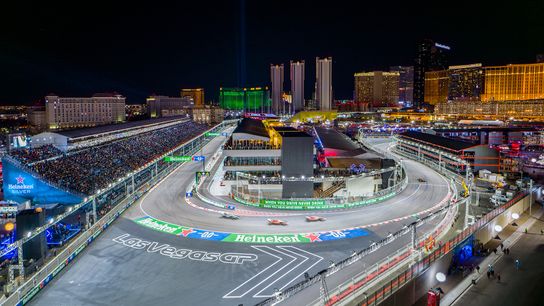
The sport's official midseason review paints an optimistic picture. Eleven consecutive Grands Prix have sold out, nearly 3.7 million spectators have attended races through the opening half of the season, and six circuits—including Australia, Silverstone, Spa-Francorchamps and the Hungaroring—have established new attendance records. Television audiences have also climbed in key markets, with particularly strong growth reported in Brazil, Italy and China.
Those are impressive numbers.
But they also invite a more important question:
Why is Formula 1 continuing to grow when many established sports are fighting simply to maintain their audiences?
The answer appears to extend well beyond what happens on Sunday afternoons.
Since Liberty Media acquired Formula 1's commercial rights in 2017, the championship has fundamentally changed how it presents itself. The sport invested heavily in digital media, social platforms, behind-the-scenes storytelling and younger audiences long before many traditional sports made similar moves. Netflix's Drive to Survive helped introduce Formula 1 to millions of new viewers, while Formula 1's own digital platforms have evolved into daily destinations rather than simple race-weekend resources. Those long-term investments continue paying dividends nearly a decade later.
The 2026 season has also provided compelling sporting narratives.
Mercedes rookie Kimi Antonelli has emerged as one of the championship's breakout stars, Ferrari has returned to regular contention at the front of the field, and the competitive balance among McLaren, Ferrari, Red Bull and Mercedes has produced a title fight with multiple storylines. Reuters reported that Formula 1 President and CEO Stefano Domenicali specifically highlighted Antonelli's emergence as an example of how new personalities are attracting younger audiences to the sport.
Commercially, Formula 1 continues to expand at a remarkable pace.
The championship added new global partners, extended agreements with several existing sponsors and announced long-term venue commitments, including a return to Malaysia's Sepang International Circuit as the temporary home of the 2026 Bahrain Grand Prix. Those moves reinforce confidence from both corporate partners and race promoters that Formula 1's growth remains sustainable rather than temporary.
Yet the picture is more nuanced than the numbers alone suggest.
Formula 1's official report highlights improved fan satisfaction scores and continued audience growth, but not every conversation inside the paddock has been entirely positive.
Several drivers have expressed concerns about elements of the 2026 regulations, particularly the increased emphasis on energy management and hybrid deployment. Lando Norris recently questioned whether commercial priorities and manufacturer interests have gained too much influence over the sport's direction. Domenicali responded by saying Formula 1 must balance technical innovation with entertainment, while emphasizing that the broader fan base remains enthusiastic about the racing product.
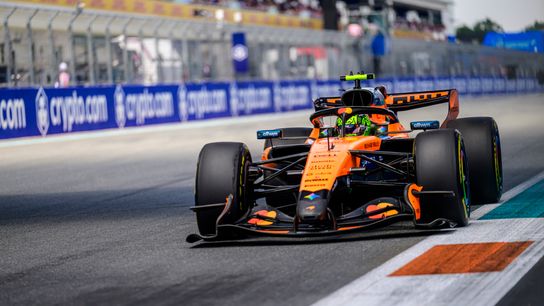
Tyler Tate/T Squared Media House via AP
That difference in perspective illustrates an important reality.
Strong attendance does not necessarily settle debates about regulations, race formats or the technical philosophy of the championship. It demonstrates demand for Formula 1 as a product, but it does not automatically mean every stakeholder agrees on the sport's direction.
The same applies to Formula 1's newest commercial ventures.
The championship has highlighted encouraging early engagement with its expanding digital and streaming strategy, including new partnerships with Apple. However, comprehensive audience data for some of those initiatives has not been released publicly, making independent evaluation difficult. Industry analysts have generally viewed the partnerships as strategically significant, but their long-term impact will become clearer only as additional viewing data becomes available.
Perhaps the most significant statistic in Formula 1's report isn't attendance, television ratings or social media engagement.
It is demographics.
Formula 1 estimates that nearly half of its global audience is now under the age of 35, while women account for roughly 42 percent of all fans and represent a substantial share of new followers entering the sport. Those figures suggest Formula 1 is not simply retaining longtime supporters—it is successfully reaching audiences that historically had little connection to motorsport.
That shift may ultimately prove more valuable than any single attendance record.
Sports businesses are built not only on today's audience, but on tomorrow's.
Formula 1 appears to understand that better than most.
The challenge now is different from the one it faced a decade ago.
Then, the objective was growth.
Today, the objective is sustaining that growth without losing the competitive identity that made Formula 1 compelling in the first place.
There is little evidence that Formula 1's commercial momentum is slowing. Independent reporting largely supports the championship's headline figures, and race promoters, broadcasters and sponsors continue investing at unprecedented levels. At the same time, debates over regulations, the competitive product and the balance between sport and entertainment remain active inside the paddock.
Both realities can be true.
Formula 1 is experiencing one of the strongest periods of commercial success in its history.
The next chapter will be defined not by how quickly it grows, but by how effectively it manages that success.